

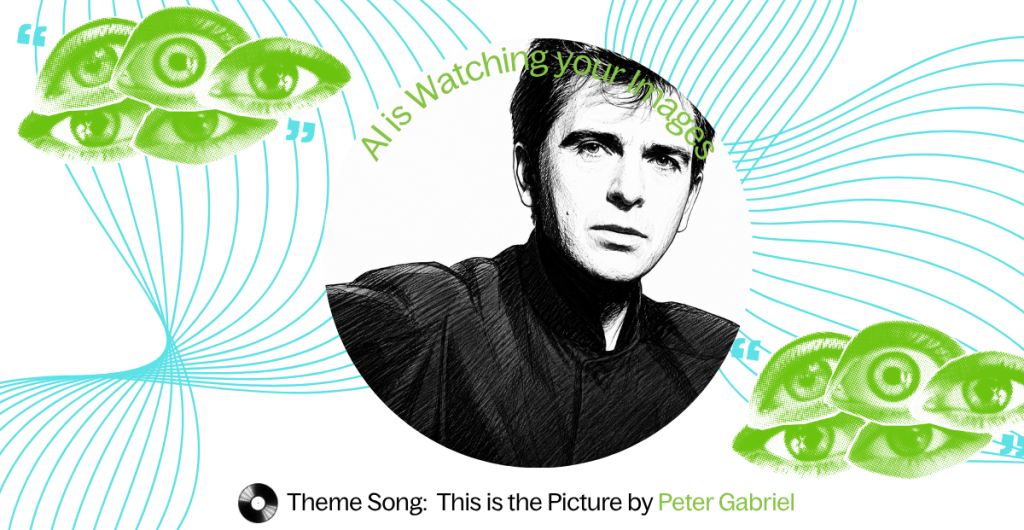
Theme Song: This Is the Picture by Peter Gabriel
“This Is the Picture (Excellent Birds),” co-written by Laurie Anderson and Peter Gabriel, came from a moment when television, satellite communication, and electronic media were transforming how images traveled — and how people made sense of them.
The song moves in fragments: birds, snow, movement, static. Separate signals, slowly resolving into one picture.
Google’s latest innovations in visual search bring that idea into the present. Images are no longer just something to look at — they’re becoming part of how people and AI discover, save, generate, understand, and remember information.
That’s why it made the RockingGEO playlist. For marketing leaders and brand teams, this shift adds a new question to AI visibility: do your images clearly belong to your brand?
Visuals can’t be an afterthought anymore, bolted on once the strategy is done. They need a recognizable fingerprint — one that ties them back to the organization, its message, and the larger story it wants people and AI to understand.
One image can catch attention. But it’s consistent visual signals that build recognition. And as AI assembles its own picture of your brand from everything it finds, those signals all need to point back to the same story.
- Google just launched 2 Visual Search updates: a dedicated Google Images homepage with saveable collections (live now), and AI-generated images inside AI Overviews via the Nano Banana model (rolling out, English-first).
- Images are now active, not passive. They can be saved, resurfaced, or replaced entirely by an AI-generated one — competing for a spot, not just sitting on a page.
- AI builds a “picture” of your brand from accumulated signals – consistent, repeated visual identity across everything.
- Consistency beats a single strong shot. A scattered visual presence loses to a recognizable, repeated pattern.
- RockingGEO’s role: shaping a visual story that fits your message, resonates with your audience, and stays memorable next to competitors.
Two Innovations, Same Direction
Google rolled out two changes to Visual Search. One is already live. The other is rolling out in the coming weeks (English-speaking regions first, as always). Together, they turn images from passive content into an active discovery layer — the same way the song turns scattered fragments into “the picture.”
Innovation 1: Google Image Collections
Go to https://images.google.com/ to learn how users can search for images based on their own preferences. The important part: users can save images into dedicated collections, return to them anytime, and even get ongoing updates related to what they’ve saved.
In other words, images are no longer something people stumble across once. They’re something people curate, keep, and get fed more of.

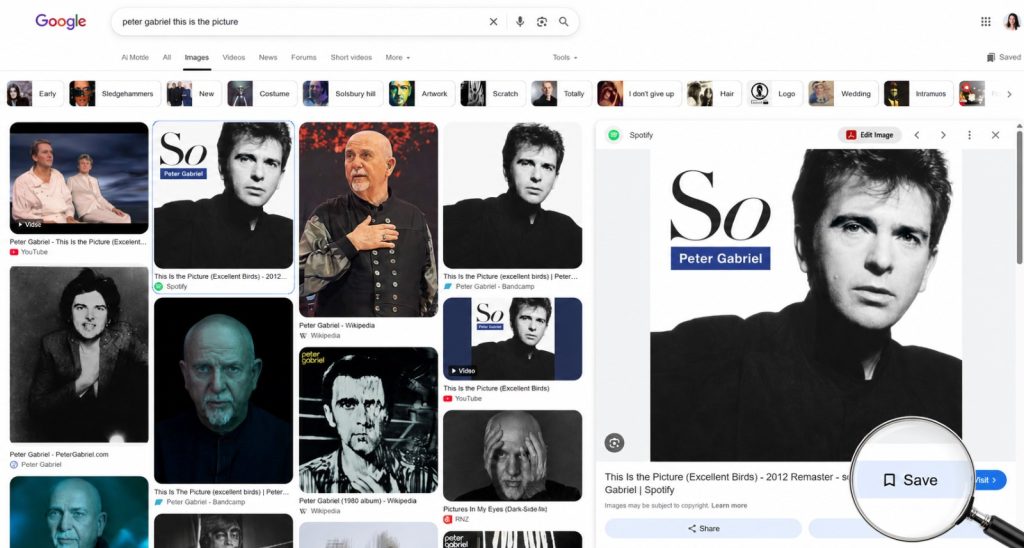
Innovation 2: the ability to generate images inside AI Overviews.
This runs on Google’s Nano Banana model, and for now it’s live in English-speaking regions where AI Mode can already return images as visual answers — not just links, not just text, but generated pictures as the answer itself.
Both innovations point in the same direction: search is becoming visual by default, and it’s becoming personal by design.
(And yes — conveniently for Google — both also mean they learn a little more about you every time you save an image or ask for one.)
Why We Put This Song on the Playlist
That is why “This Is the Picture (Excellent Birds)” made the Rocking GEO playlist. We see brands treat images as decoration — something to make the page “look nice” — while Google is quietly rebuilding search around the picture itself as the answer.
Cute.
If AI can now generate the picture, and users can now save, collect, and get resurfaced pictures based on what they liked before, then your images aren’t sitting on a page waiting to be seen anymore. They’re candidates — competing to be the one AI chooses to save, generate near, or recommend to someone who looks like your ideal customer.
You updated your photo. Google just changed who’s allowed to become the picture.
Sitting by the Window, Watching It Fall
“I’m sitting by the window, watching the snow fall. I’m looking out.”
That’s where most brands are right now with this update — watching it happen without registering what’s accumulating in front of them.
Every image you publish is now a flake in a much bigger, much more active system. One where Google isn’t just indexing your photo — it’s deciding whether to save it into someone’s collection, resurface it to similar users, or generate a new one instead of showing yours at all.
You’re not watching from a distance anymore. You’re already part of what’s falling.
Why This Changes the Rules for Images
Before these updates by Google, an image on your website was largely passive — indexed, occasionally shown in a search result, easy to ignore if it wasn’t optimized.
Now:
- Users actively build collections around images they like, meaning a saved image keeps resurfacing — a rejected or ignored one disappears from the loop entirely.
- Google’s AI can generate its own image as the answer inside AI Overviews, meaning your product photo isn’t just competing with other product photos — it’s competing with an AI-generated one that didn’t need you at all.
- Both features are built on personalization. The system is learning what a user likes and actively serving more of it. If your imagery never gets saved, it never enters that loop.
This is no longer about being indexed. It’s about being chosen, saved, and repeated.
What Brands Should Actually Do With This
Whether you’re a company or a personal brand where you are the product — your images now have a job to do beyond looking good. They need to be recognizable enough to get saved, and consistent enough to get resurfaced.
At RockingGEO, that’s our green frame that follows us everywhere, and more recently, black-and-white sketches – mostly in the context of bands rock-stars. Not aesthetic for its own sake. Identification.

Images that genuinely inspire get saved by users. Saved images are exactly what Google’s AI uses to recommend the same imagery to similar users.
That loop — save, recommend, resurface — is the new picture. Miss it, and you’re not part of the collection. You’re the snow that already melted.
Some Pixels You Can Redraw. Others You Have to Outweigh.
Some visual signals are yours to fix.
Replace outdated photos. Standardize your visual guidelines across every channel. Update old thumbnails. Refresh team photos. Ask partners to use current imagery.
Other signals aren’t yours to control.
Old event photos will stay online. Press images won’t get swapped out. User-generated content will keep using whatever look they captured at the time.
You can’t erase the old picture entirely.
You can make the new one louder, clearer, and more consistent — until it’s simply the picture that shows up more often.
Where RockingGEO Comes In
At RockingGEO, we help brands find the visual story that actually fits their message and align it with the different audiences that need to recognize it.
We make sure your visuals tell the right story to the right person, while keeping it memorable and recognizable.
That means mapping what AI currently sees:
- Which images and visual signals already define your brand across the web
- How consistent that picture actually is, across every platform and third party
- Which visual signals are working for you, and which are working against you
- What competitors’ pictures look like next to yours
Then we build the picture you actually want – through visual consistency strategy, image optimization, and deliberate repetition across every asset your brand controls and influences.
🎵 Our Last Note:
You Are the Picture.
Now Make Sure AI Sees It Right.
Brands will keep shooting new campaigns, redesigning logos, and refreshing their visual identity. That’s normal brand life.
What changes in the AI era is what happens after the shutter clicks.
You’re no longer just choosing what people see. You’re feeding the picture AI is assembling of who you are, one image at a time, whether you’re paying attention or not.
The photoshoot can happen in a day.
Becoming the picture – consistent, credible, repeated, unmistakable – takes time.
This is the picture. Now go make sure it’s yours.
about the author

I’m Roni Calvo Bar Oz – founder of RockingGEO and an SEO/GEO consultant.
For more than 20 years , I’ve helped B2B companies find their audience in competitive global markets. Today, I’m helping brands learn a new rhythm: the language AI, search engines, and people all understand.
Every great band has its own sound. Every great brand should too.
My job is to help brands find that sound.
I’m endlessly curious about how people ask questions, how AI connects meaning, and how brands can become the soundtrack to the conversations that matter.
When I’m not working, you’ll probably find me listening to music, spending time with my family, asking one question too many, or chasing the next great idea. Because the best strategies, just like the best songs, stay with you long after they’re over.